Chapter III
Preserving identity, striving for freedom
1950–1991
After the war the Lithuanian community in Sweden faced serious challenges. Emigration to the United States, Canada and Australia reduced the number of Lithuanians in Sweden to around a hundred, the student organisation “Šviesa” ceased its activities, and Soviet-occupied Lithuania was cut off from the West, making direct contact with the homeland impossible. Even so, the community remained active — though on the margins of Lithuanian émigré life: it brought compatriots together, cooperated with Latvian and Estonian organisations, and kept reminding the international community of Lithuania’s occupation and its struggle for freedom.
Lietuvių Draugija Švedijoje becomes Švedijos lietuvių bendruomenė — today the Lithuanian Community in Sweden
The community joined the emerging worldwide network of Lithuanian organisations and, from 1958, became a member of the Lithuanian World Community (PLB).

Support for Lithuanian education
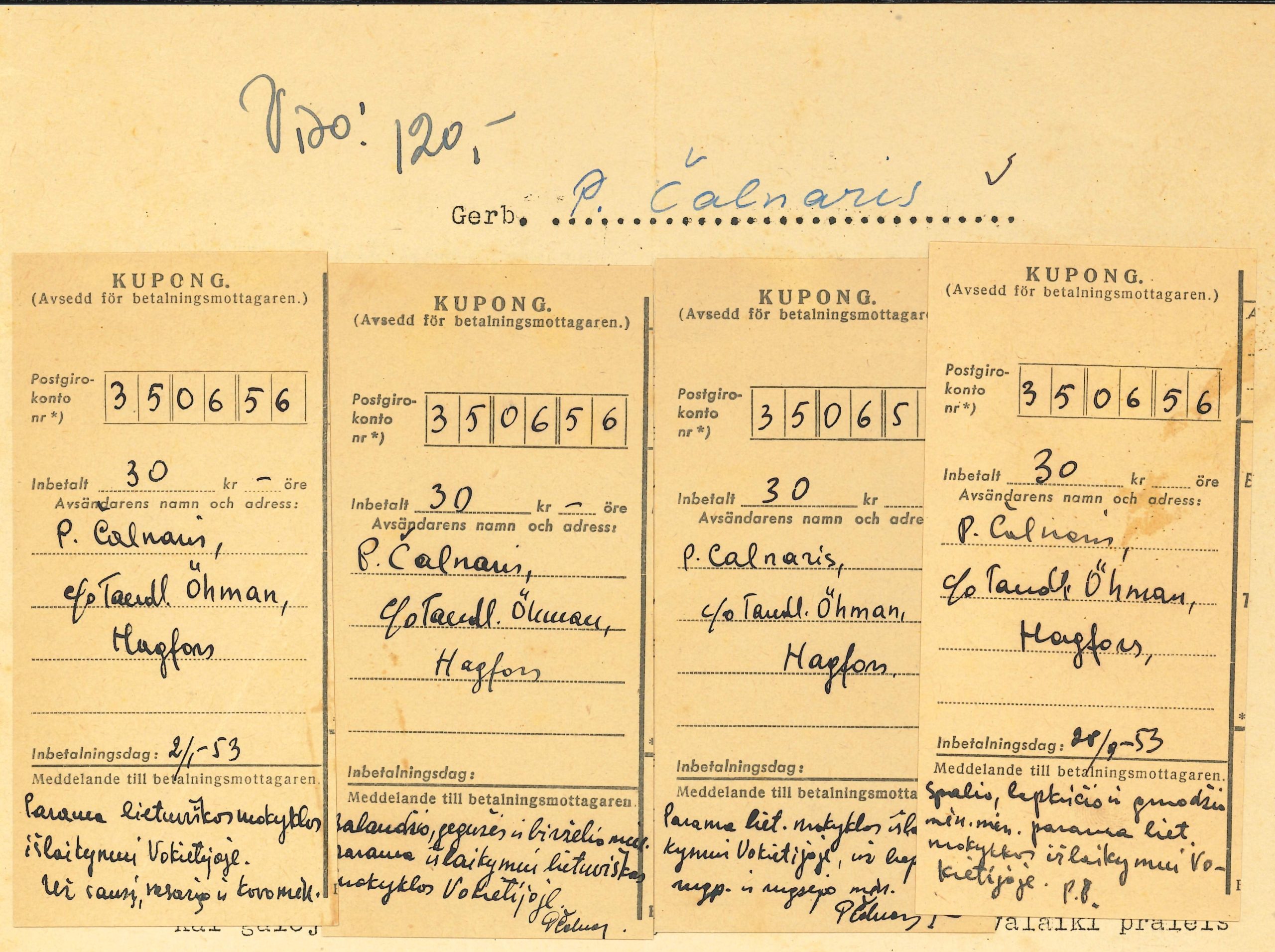
Lithuanians in Sweden contributed actively to education in exile. Members of the community gave financial support to the 16 February Gymnasium in Germany, which became post-war Europe’s foremost centre of Lithuanian schooling.
Onward migration from Sweden
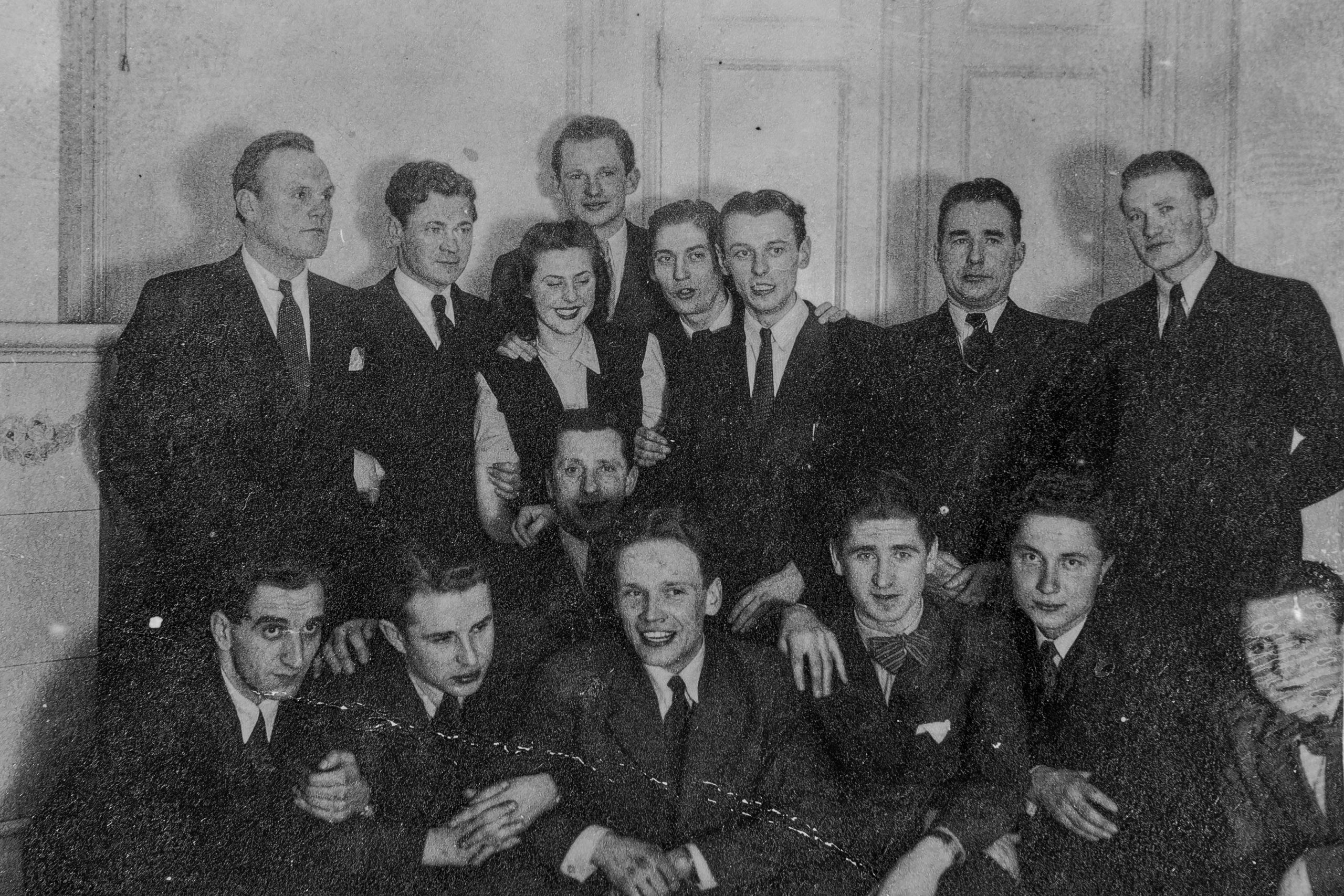
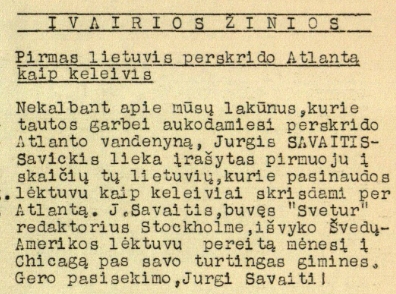
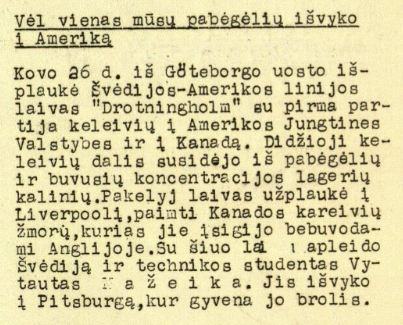
Some of the Lithuanians who had settled in Sweden soon travelled on — to the United States, Canada and Australia. It was this emigration that reduced the community to around a hundred people.
The Baltic Peace and Freedom Cruise
In 1985 representatives of Sweden’s Lithuanians joined figures from the Baltic World Council on the Baltic Peace and Freedom Cruise (Stockholm–Helsinki). The action united Lithuanian, Latvian and Estonian organisations around a common goal: to work for the freedom of the Baltic states and draw international attention to the Soviet occupation. Stockholm became one of its main centres, hosting the closing events and a demonstration.
The European Lithuanian Study Week. The Gotland Communiqué
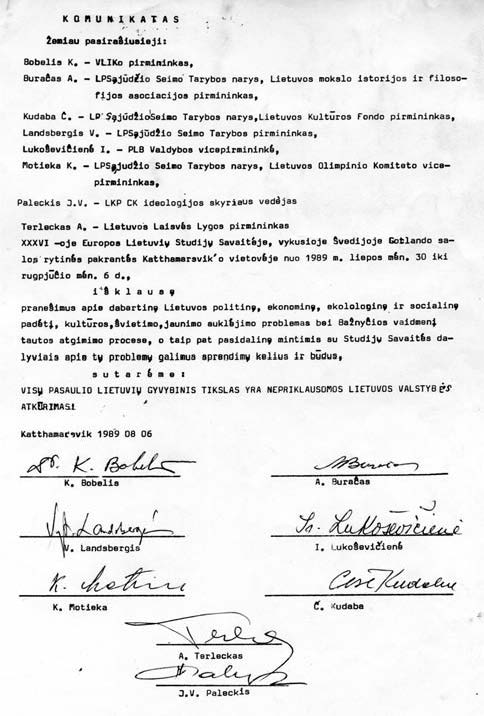
In August 1989, during the European Lithuanian Study Week held at Katthammarsvik on the island of Gotland, the Gotland Communiqué was signed. It declared that the vital goal of Lithuanians everywhere was the restoration of an independent Lithuanian state.
The document became one of the most important political statements of the diaspora during the national revival, and stood as a symbol of Lithuanian unity in the pursuit of freedom. Klemensas Gumauskas, long-serving chairman of the Lithuanian Community in Sweden, helped organise the event.
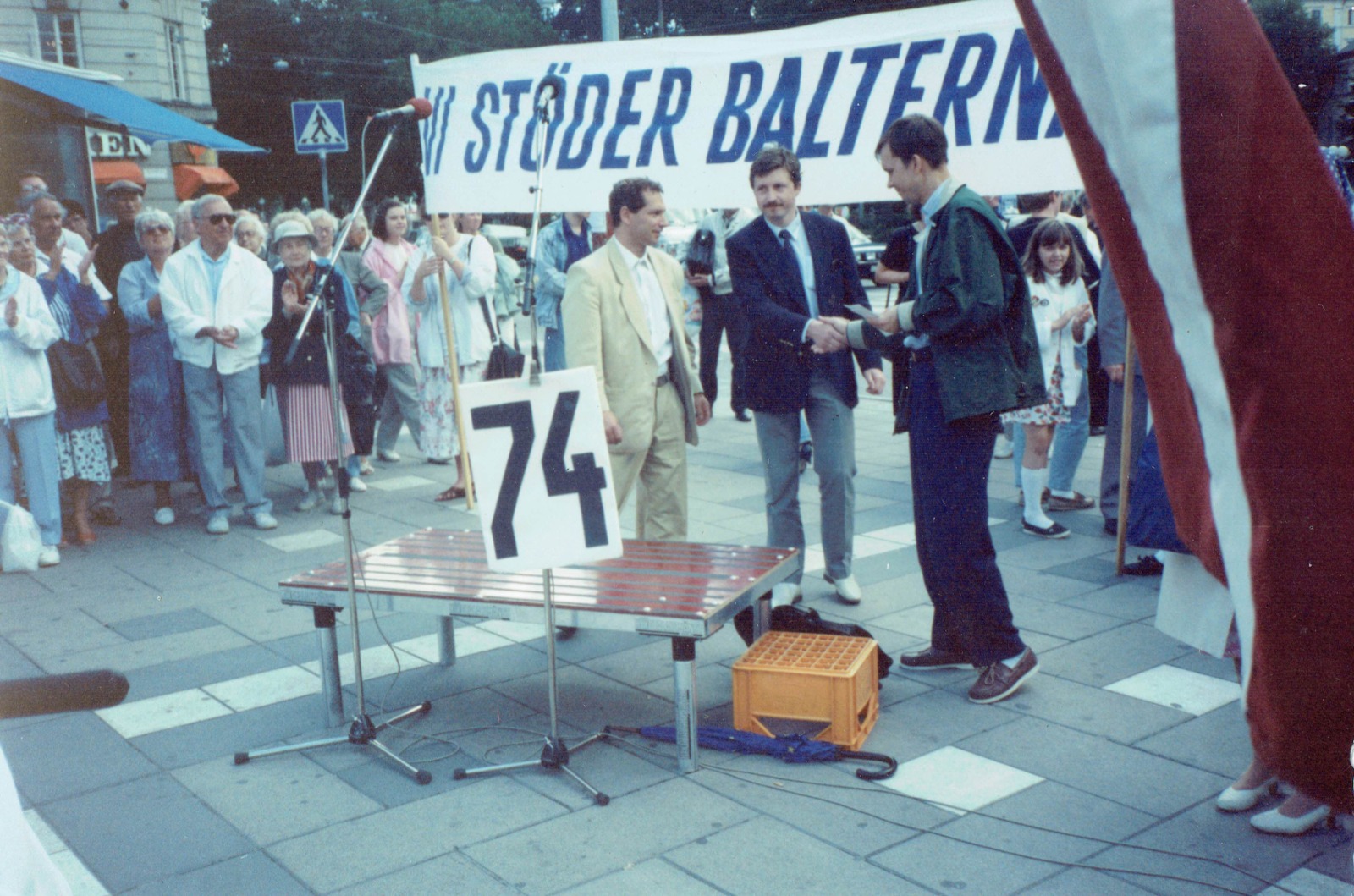
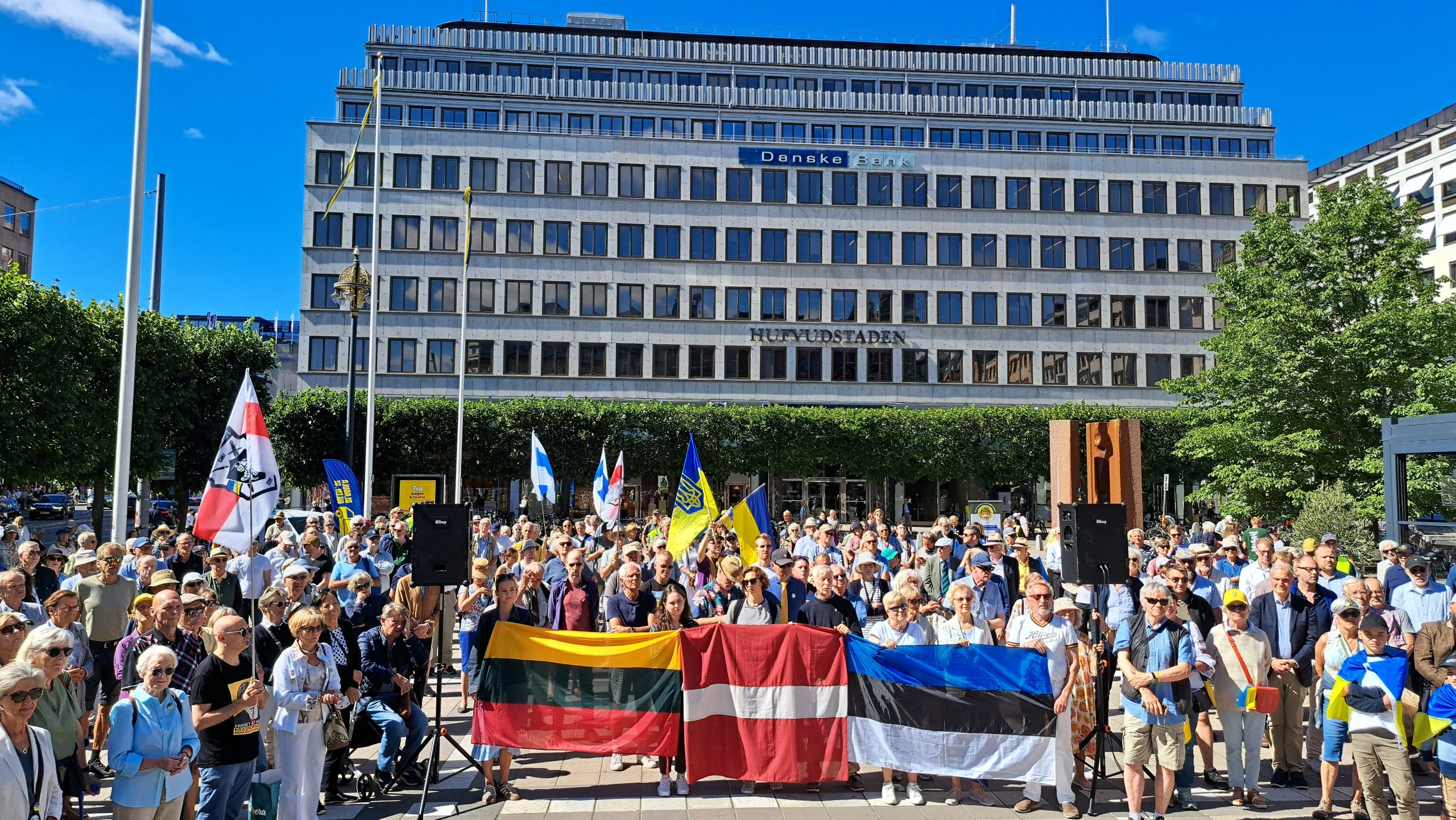
The Monday demonstrations (Swedish: Måndagsrörelsen)
The first Monday gathering took place at noon on 19 March 1990 on Norrmalmstorg square in Stockholm. Its initiators were Gunnar Hökmark, secretary of the Moderate Party, the Liberal politician Håkan Holmberg, and the writers Andres Küng and Peeter Luksep, both of Estonian descent.
Around 80 gatherings were held in all. At these meetings, which also took place in other Swedish cities, participants expressed support and solidarity with the Estonian, Latvian and Lithuanian peoples in their struggle to regain freedom.