Chapter I
Origins of the Lithuanian community in Sweden
1915–1947
Even before the Lithuanian Association in Sweden was founded, Sweden was an important centre for Lithuanian political activity, for spreading information, and a place of refuge for Lithuanian refugees.
The Stockholm conferences
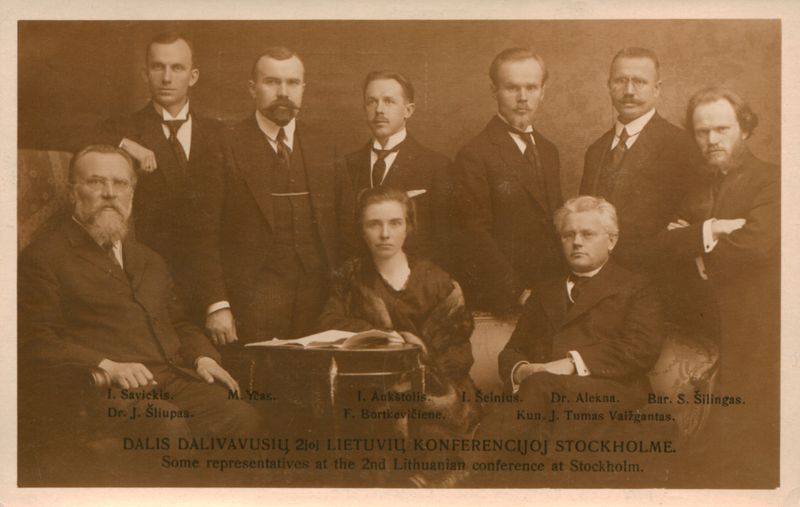
The Stockholm conferences called for international recognition of Lithuanian independence, for the right of the Lithuanian people to decide freely on the future of their state, and for Lithuania’s representatives to be recognised as the legitimate defenders of the nation’s interests on the international stage.
The Lithuanian Press Bureau in Stockholm
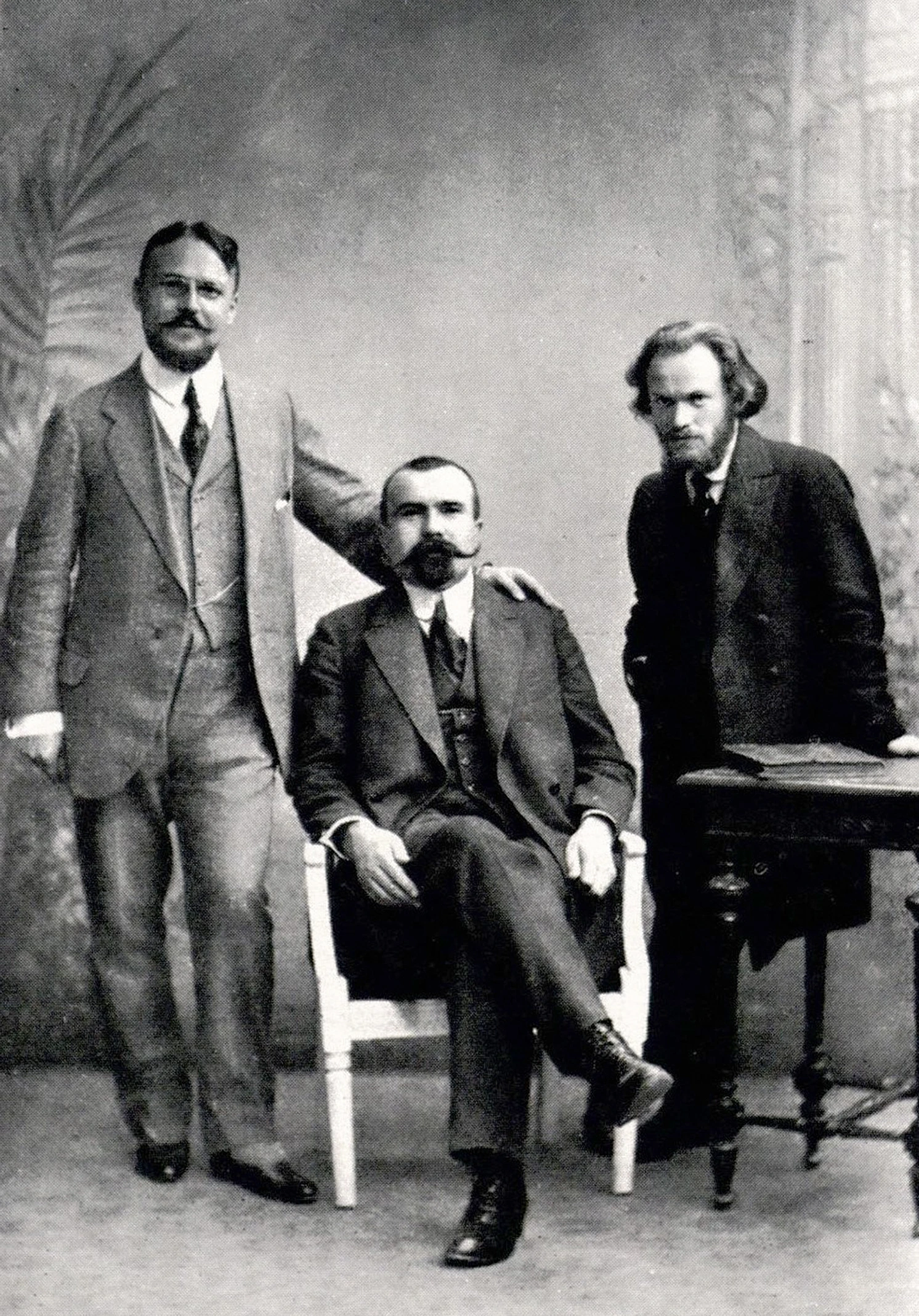
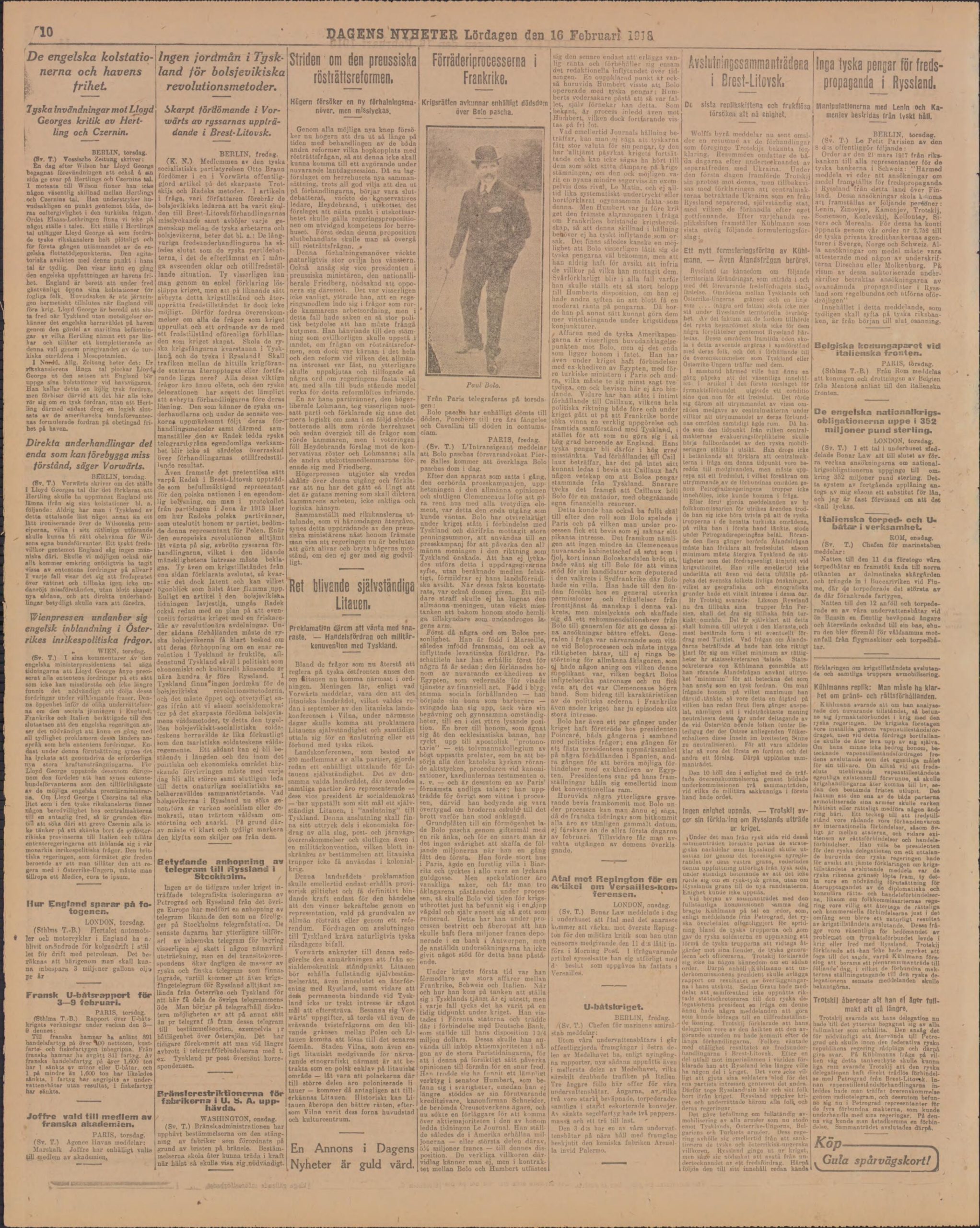
From 1917 to 1918 the Lithuanian Press Bureau (Swedish: Litauiska Pressbyrån) operated in Stockholm, founded on the initiative of Ignas Šeinius. It circulated information about Lithuania in the Scandinavian press, and in 1918 it carried the news of the restored Lithuanian state to newspapers across Western Europe.
Ignas Jurkūnas-Šeinius
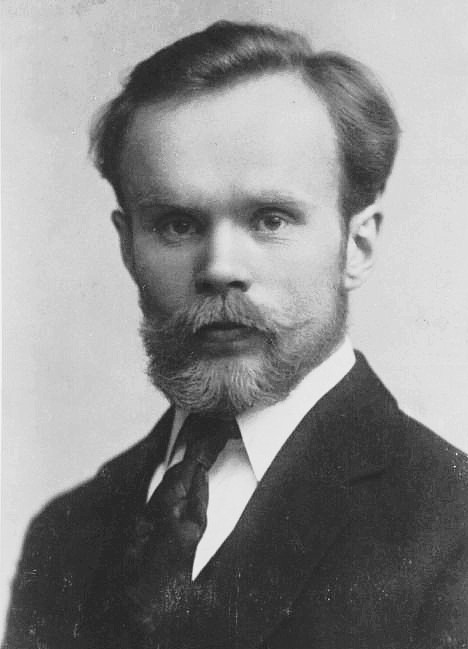
The writer, diplomat and public figure Ignas Jurkūnas-Šeinius (1889–1959) lived in Sweden from 1915 to 1959. In 1917 he published Litauisk kultur (Lithuanian Culture) in Swedish, introducing Lithuanian art, music and culture to Swedish readers.
He went on to publish several significant works of anti-Soviet journalism: Den röda floden stiger (The Red Flood Rises, 1940), Den röda resan (The Red Journey, 1943) and Den röda floden svämmar över (The Red Flood Overflows, 1945).
His cultural work was continued by his son, Irvis Scheynius, who published the poetry collection Litauisk lärdom (Lithuanian Wisdom, 1990) and the autobiographical novel Nora Latin (Northern Latinity, 1999).
His grandson, Ignas Scheynius, is an active contributor to cultural ties between Lithuania and Sweden. He works to promote Lithuania in Sweden and initiates and supports cultural projects. From 2018 to 2026 he served on the board of the Swedish-Lithuanian Cooperation Fund.
The Swedish-Lithuanian Society in Stockholm
The Swedish-Lithuanian Society operated in Stockholm, founded on the initiative of Ignas Šeinius. Its aim was to strengthen cultural, scholarly and civic ties between Lithuania and Sweden. Its activities were resumed in 1990.
The Lithuanian Committee
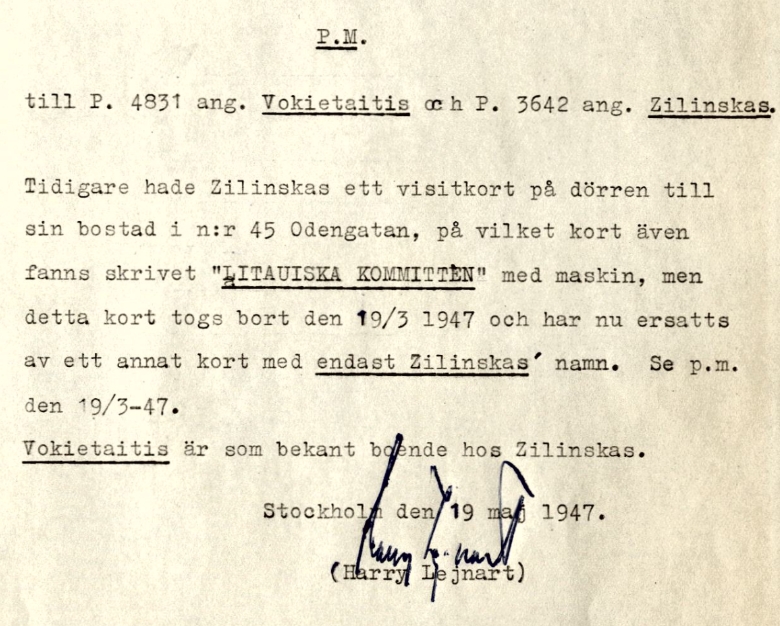
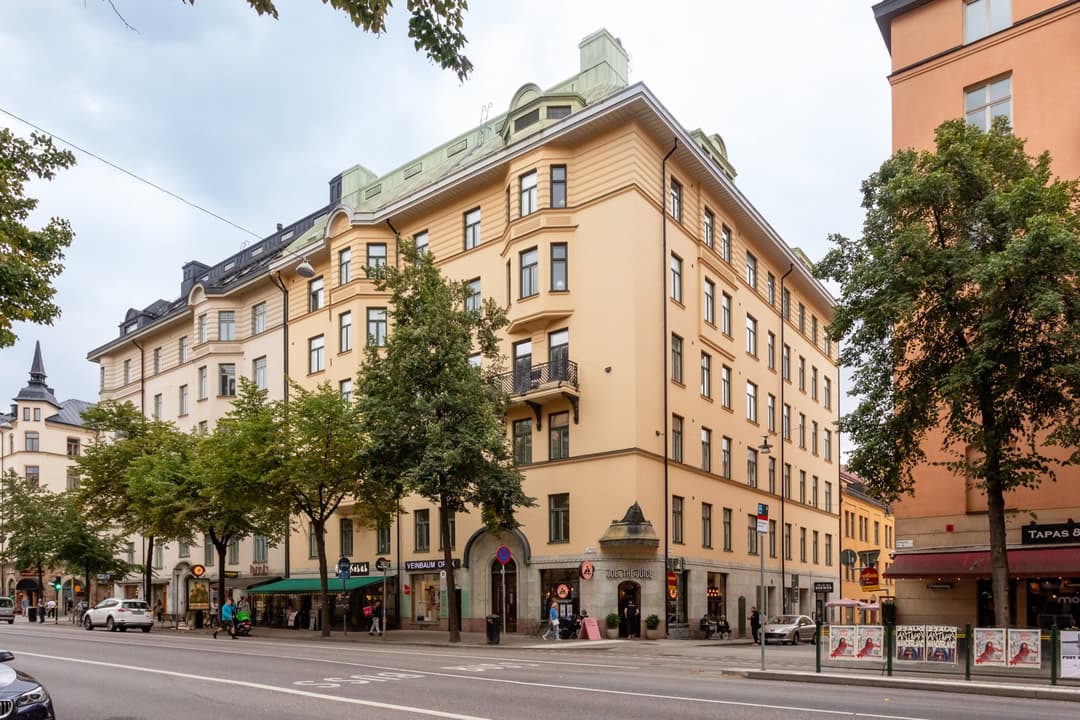
From 1943 to 1946 a centre for Lithuanian political activity and information — secret at first — operated in Stockholm under the name of the Lithuanian Committee. Its first members were A. Vokietaitis, V. Gylys, I. Jurkūnas-Šeinius and Vl. Žilinskas.
The committee maintained contacts with Lithuania, the Supreme Committee for the Liberation of Lithuania (VLIK), the United Kingdom and the United States. It gathered and passed on information about conditions in occupied Lithuania, and informed the Swedish public about the country’s political and social situation.
As the representative of the United Lithuanian Relief Fund of America, the committee provided aid and financial support to Lithuanians arriving in Sweden, and helped organise the evacuation of vulnerable people from Lithuania.
Refugee routes to Sweden
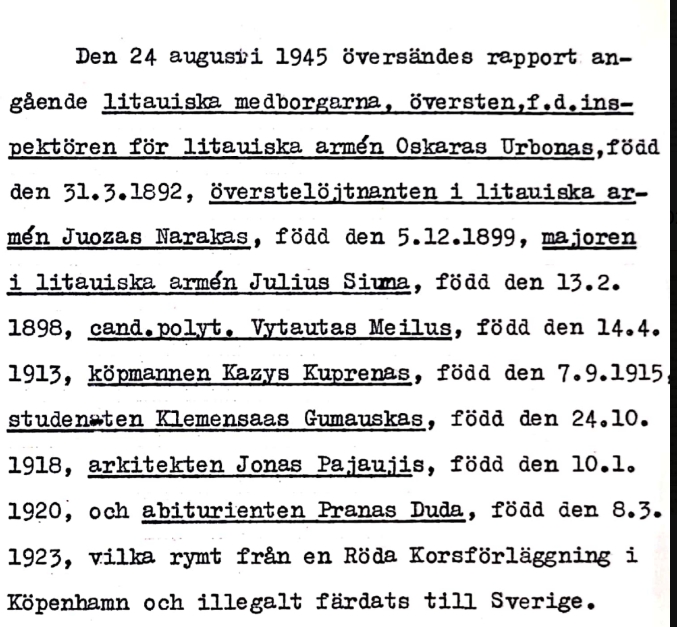
The first Lithuanian refugees arrived in Sweden at the end of the Second World War. Most were political émigrés fleeing the Soviet occupation. They reached Sweden by various routes: by boat from the Lithuanian coast, escaping Nazi labour camps in Finland and Norway, or hidden aboard merchant ships from Gdansk.
In 1945 prisoners from the Stutthof concentration camp reached Sweden. The country became an important place of refuge for Lithuanians fleeing the war and the Soviet occupation.