Chapter IV
A new wave of emigration after 1990
1990–2026
After Lithuania regained independence in 1990, a new wave of emigration began towards Western Europe, Sweden among the destinations. Many left in search of better work, study and living conditions. The Lithuanian community in Sweden carried on, and new organisations began to appear alongside it.
Ties restored and the first new initiatives
-
1990Svensk-Litauiska riksföreningen is re-established, continuing the tradition of the society active in 1925–1940.
-
1996The Lithuanian school “Saulės mokykla” is founded in Stockholm.
-
1997The book Švedijos lietuviai (Lithuanians in Sweden) is published; a Swedish edition follows in 1998.
-
2002To mark Gintautas Būga’s 75th birthday, Lietuvių mokyklos Švedijoje rėmimo fondas (a fund supporting the Lithuanian school) is established to sustain the Lithuanian language.
-
2003The Lithuanian folk dance group “Baltija” is founded in Stockholm.
-
2003–2011The Lithuanian Community in Sweden publishes its newsletter (Informacinis leidinys) — a chronicle of the community’s activities and events. Copies are sent to the National Library of Lithuania.
Rapid growth after joining the European Union
When Lithuania joined the EU in 2004, migration to Sweden increased sharply. New organisations and schools were established, and a range of cultural and youth initiatives emerged. Many of them are still going today.
-
2005The first international gathering of Lithuanian schools, “Draugystės tiltas” (Bridge of Friendship) is held in Sigtuna.
-
2006Baltic Day (Swedish: Baltikumdagen) begins to be held in Stockholm.
-
2008A branch in Skåne (Skonės skyrius) is founded.
-
2009–2019The Lithuanian school “Gintaras” operates in Helsingborg.
-
2010Lietuvių–švedų bendruomenė Geteborge (the Lithuanian-Swedish community in Gothenburg) is founded. The Lithuanian school “Draugystė” begins work in Gothenburg.
-
2012Verslo vadovų klubas (VVK) — the business leaders’ club — is established in Skåne.
-
2013Vesteros lietuvių bendruomenė (the Lithuanian community in Västerås) is founded.
-
2014Lietuvių jaunimo bendruomenė Švedijoje (the Lithuanian youth community) is founded.
-
2015The Lithuanian Community in Sweden is reorganised as an umbrella organisation. Stokholmo lietuvių bendruomenė (the Lithuanian community in Stockholm) and Lithuanian Professionals in Stockholm Club are founded.
-
2018The ethnographic ensemble “Bitkrėslė” is founded.
-
2019The Lithuanian school “Rytas” is founded in Eskilstuna and Västerås.
-
2022Švietimo taryba — Lärarkårens Utbildningsråd i Sverige, the teachers’ education council — is founded.
-
2023The women’s choir “Upė” is founded in Stockholm.
-
2024Vakarų Švedijos lietuvių bendruomenė (the Lithuanian community of West Sweden) is founded in Gothenburg. The Lithuanian nursery school “Obuoliukas” opens in Gothenburg. Smolando lietuvių bendruomenė Švedijoje (the Lithuanian community of Småland) is founded, bringing together Lithuanians in south-eastern Sweden.
-
2025The folk dance group “Laisvė” is founded in Gothenburg. Smolando lietuvių lituanistinė mokykla (the Lithuanian school of Småland) opens in Jönköping. Lietuvos šaulių sąjungos rėmėjų grupė Švedijoje (the support group of the Lithuanian Riflemen’s Union) is founded.
-
2026Europos lietuvių kultūros dienos (the European Lithuanian Culture Days) are held in Stockholm.
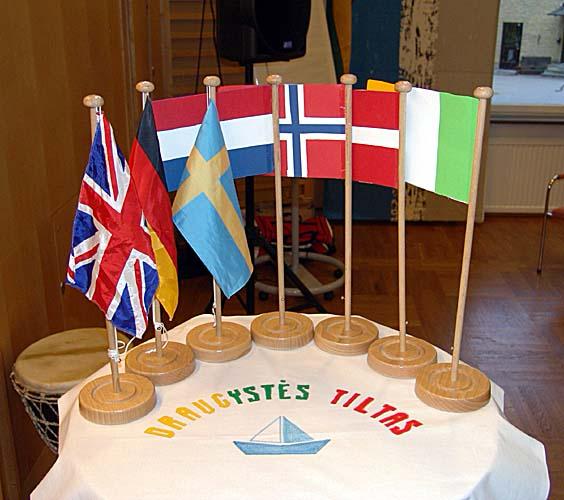
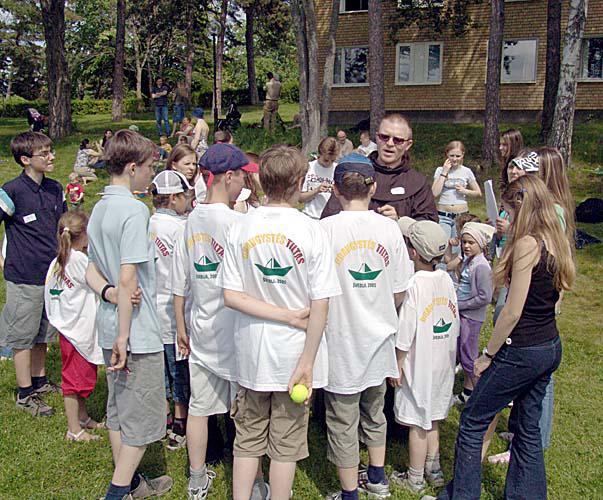
The first “Draugystės tiltas” gathering in Sigtuna, 2005. More than 150 Lithuanians from various EU countries took part. Organising team: Eleonora Jonušienė, Jonė Šeštakauskaitė, Audronė Vodzinskaitė-Städje, Lilia Bakanauskaitė, Agnė Skeberdytė and Regina Molina.
Organisations, schools and arts ensembles
Today Sweden has a broad network of Lithuanian organisations — from regional communities and Lithuanian schools to professional clubs and arts ensembles.
Communities and professional organisations
-
2008Švedijos lietuvių bendruomenė Skonėje — Lithuanian community in Skåne
-
2010Lietuvių–švedų bendruomenė Geteborge — Lithuanian-Swedish community lietuviaigeteborge.se Facebook
-
2012Verslo vadovų klubas (VVK) — business leaders’ club, Skåne
-
2013Vesteros lietuvių bendruomenė — Lithuanian community in Västerås
-
2014Lietuvių jaunimo bendruomenė Švedijoje — Lithuanian youth community jaunimas.se Facebook Instagram
-
2015Stokholmo lietuvių bendruomenė — Lithuanian community in Stockholm
-
2015Lietuvos profesionalai Stokholme — Lithuanian Professionals in Stockholm Club lpsclub.se LinkedIn Facebook
-
2024Vakarų Švedijos lietuvių bendruomenė — Lithuanian community of West Sweden vsl.lt
-
2024Smolando lietuvių bendruomenė Švedijoje — Lithuanian community of Småland Facebook
-
2025Lietuvos šaulių sąjungos rėmėjų grupė Švedijoje — support group of the Lithuanian Riflemen’s Union
Lithuanian education
-
1996Stokholmo lituanistinė „Saulės“ mokykla — Lithuanian school, Stockholm saulesmokykla.se
-
2010Geteborgo lituanistinė mokykla „Draugystė“ — Lithuanian school, Gothenburg
-
2019Lituanistinė mokykla „Rytas“ — Lithuanian school, Eskilstuna and Västerås lituanistinemokyklarytas.com Facebook
-
2022Švietimo taryba — Lärarkårens Utbildningsråd i Sverige
-
2024Lituanistinė mokyklėlė „Obuoliukas“ — Lithuanian nursery school, Gothenburg
-
2025Smolando lietuvių lituanistinė mokykla — Lithuanian school, Jönköping
Arts ensembles
Other organisations in Sweden
-
1925Svensk-Litauiska riksföreningen — active 1925–1940, re-established in 1990. svensklitauiska.se
-
2002Lietuvių mokyklos Švedijoje rėmimo fondas — a fund supporting the Lithuanian school, founded on the initiative of Gintautas Būga, son of the linguist Kazimieras Būga.
The Lithuanian Community in Sweden today

The umbrella organisation has eight member associations
- Stokholmo lietuvių bendruomenė (Stockholm)
- Švedijos lietuvių bendruomenė Skonėje (Skåne)
- Smolando lietuvių bendruomenė (Småland)
- Vakarų Švedijos lietuvių bendruomenė (West Sweden)
- Lithuanian Professionals in Stockholm Club
- Verslo vadovų klubas (VVK)
- Lietuvių jaunimo bendruomenė Švedijoje
- Lietuvos šaulių sąjungos rėmėjų grupė Švedijoje
Credits Material compiled by Karolina Musteikytė. The community’s historical photographs come from Eva Dankis’s personal archive. Images restored by Thomas Gedminas.